De Monstrorum Caussis, Natura, et Differentiis
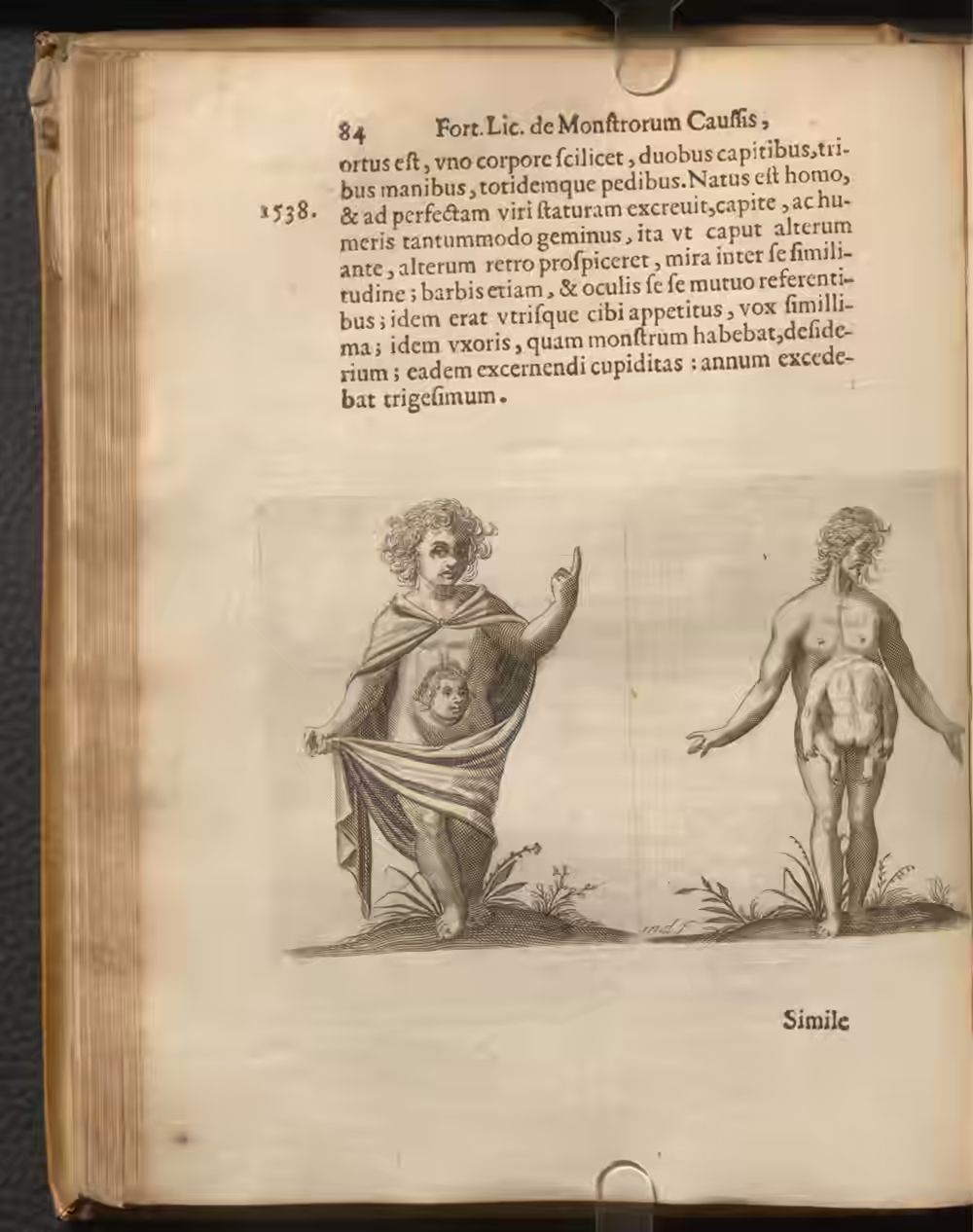
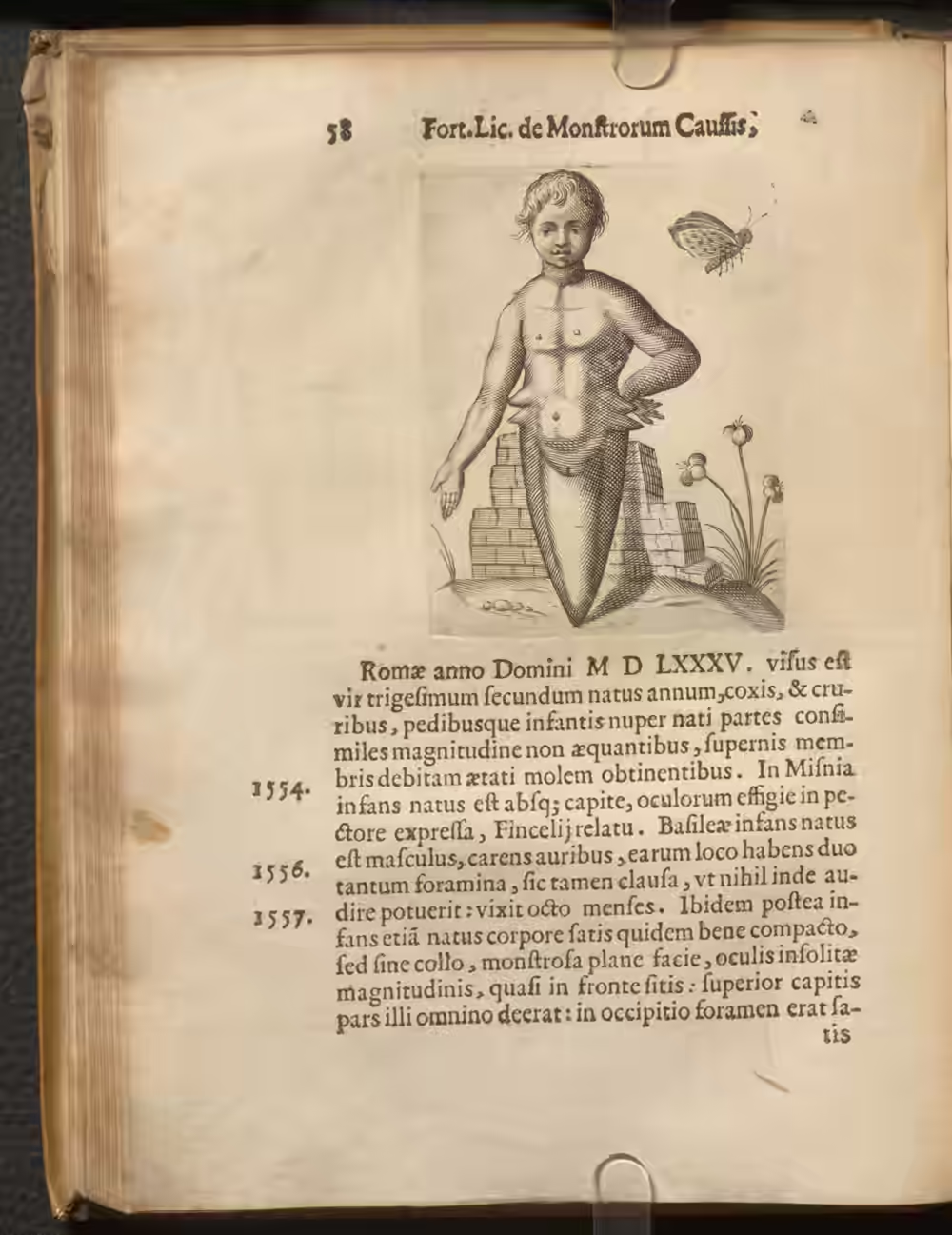
In 1634, in Padua, a curious volume appeared from the press of Paolo Frambotto: On the Causes, Nature, and Differences of Monsters, in Two Books — the life's study of Fortunio Liceti, professor of philosophy at the University of Padua. It is one of the founding texts of teratology, the science of monsters: two-headed infants, conjoined twins, dog-faced children, horned satyrs, and sea-bishops, all examined with straight-faced Aristotelian rigor and illustrated with astonishing woodcuts and copperplate engravings.
For nearly four centuries, if you wanted to read it, you needed to read Latin. This site is changing that — page by page.
What we've built
A digital reader for the whole book. All 320 scanned pages of the 1634 edition — held by McGill University Library and digitized by the Internet Archive — are presented at high resolution, alongside a parallel English translation that grows page by page. The scan always stays visible next to the text, so you can check every sentence against the page it came from, and so the woodcuts — the real reason this book is famous — are never more than a glance away.
Translation method
There is no OCR pipeline here. Each page's Latin is transcribed by a frontier language model looking at the actual page scan — reading the long s, the ligatures, the cramped marginal citations, the printer's errors — and then translated into clear, contemporary English that preserves Liceti's meaning and scholarly tone. Each page exists in two registers: a readable rendering and a strictly faithful one.
It is openly machine-made — and it is good. Where it can be better, it will get better: pages are re-translated as the models improve, one file per page, and the original scan always sits beside the text so you can judge every sentence for yourself.
Why this book matters
Liceti lived from 1577 to 1657 — a contemporary of Galileo, who was his colleague and friend at Padua. He spent his career on the borderland between natural philosophy and medicine, and De Monstris is his masterpiece: the first systematic attempt to treat monstrous births not as omens or divine warnings, but as natural events with physical causes.
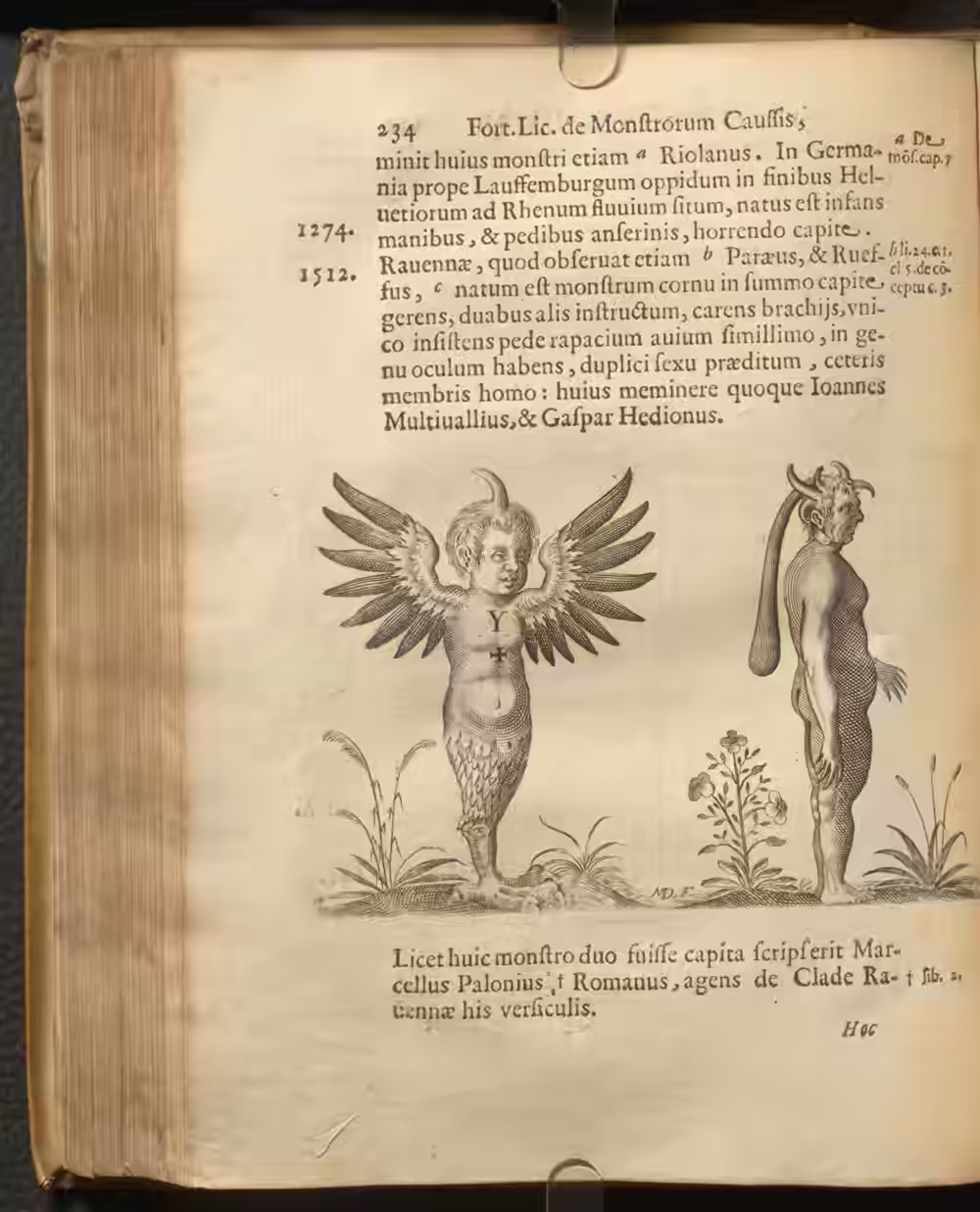
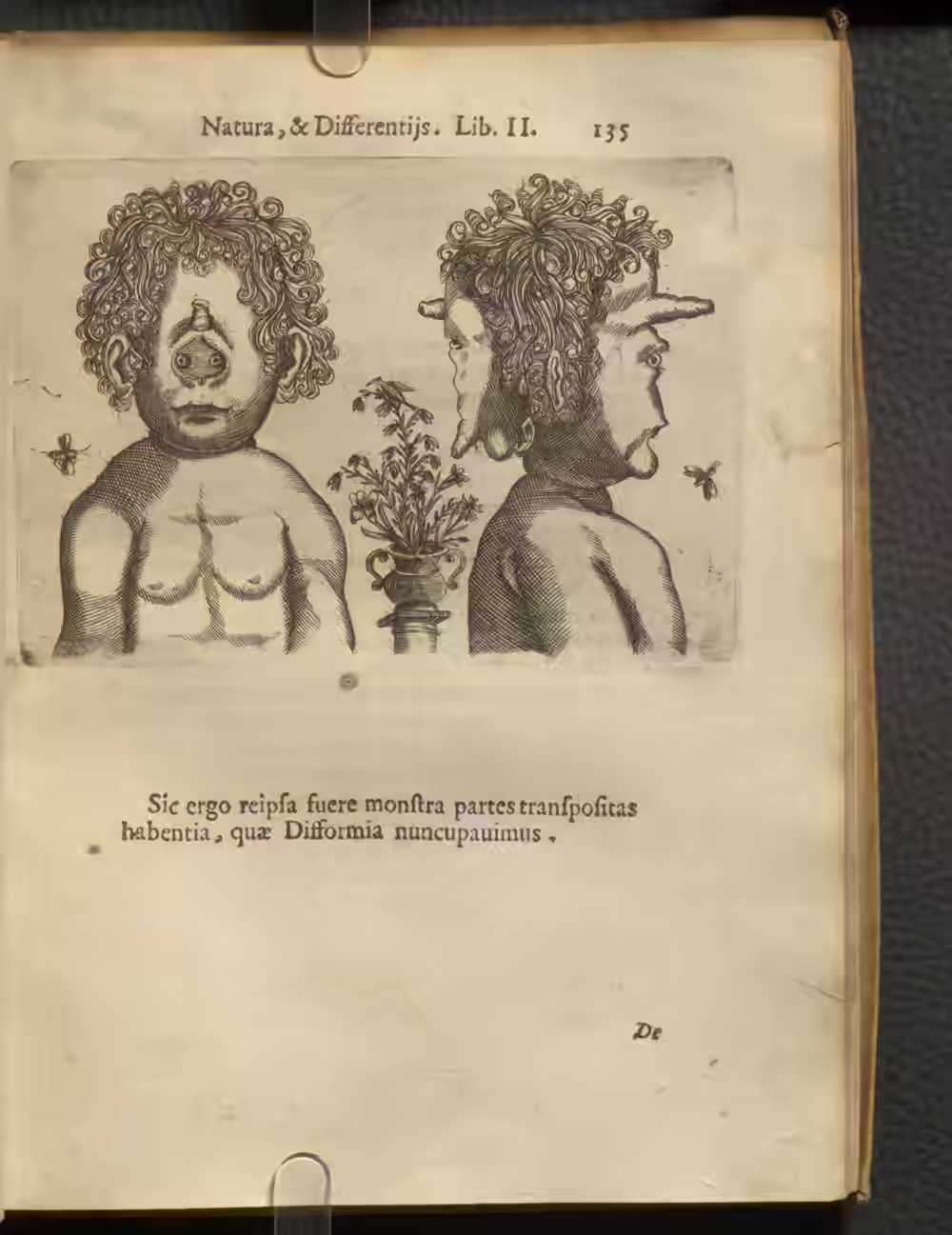
He opens the book by demolishing the popular etymology — beloved of Cicero — that monsters are called monstra because they "show" (monstrare) the future. Monsters, Liceti insists, are errors of nature, not messages. Then he gets to work: the material cause, the efficient cause, the womb, the imagination of the mother, case after extraordinary case — the Monster of Ravenna with its horn and its bird's leg, headless men with eyes upon their shoulders, a child with a single eye in the center of its forehead.
He was wrong about plenty. But he was wrong in a new and important way: he assumed the strange was explicable. That assumption is the beginning of science.
Why I made this
AI has given everyone a longer lever. I'm trying to make good use of mine. A 400-year-old Latin monster book that had never been fully Englished felt like a good use — the same impulse as my Monstrorum Historia project, which translated Aldrovandi's great 1642 compendium. Some people will hopefully enjoy it.
Contribute
This is an open project, and it is built to be improved. The translation lives as one small file per page, so improving a single page is a single-file edit — no special tooling required. If you read Latin, spot an error, or can render a passage more faithfully, contributions are warmly welcome. As better models appear, pages will also be re-translated and upgraded over time.
The source scan is public domain, courtesy of McGill University Library via the Internet Archive.
De Monstris waited 391 years for an English translation.
Here it comes, one page at a time.
Created by @joonaheino